What Are Clinical Guidelines?
Clinical guidelines are evidence-based recommendations that help doctors, nurses, and other healthcare professionals make decisions about patient care. These guidelines cover best practices for diagnosing, managing, and treating specific health conditions, based on the latest research, expert opinions, and clinical experience. They can guide everything from which tests to order, to which treatments are most effective, and even how to monitor patients over time.
Why are they important? Clinical guidelines create a standard approach to treating a condition, which helps ensure that patients receive the same quality of care regardless of where they are treated. This can reduce variations in care, leading to more reliable and effective treatment across different locations. Guidelines help healthcare providers make informed decisions based on current scientific evidence, reducing guesswork and the risk of outdated practices. This can improve patient outcomes by encouraging the use of treatments that have been proven to work. And, patients benefit when healthcare providers use clinical guidelines, as these are often transparent and shared publicly. Patients can look up these recommendations and discuss them with their providers, empowering them to make informed decisions about their own care.
National Comprehensive Cancer Network Clinical Guidelines for LCH, ECD, and RDD
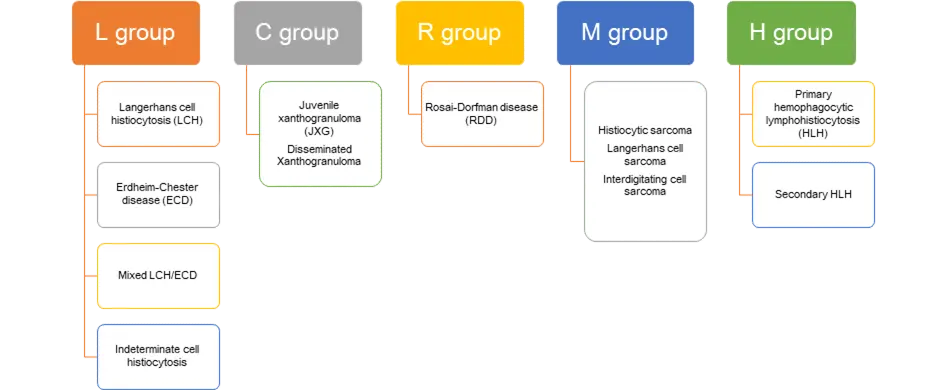
In 2021, the National Comprehensive Cancer Network® (NCCN®) – an alliance of leading cancer centers – announced the publication of NCCN Guidelines® for histiocytosis. These clinical practice guidelines provide the latest evidence and expert-consensus for diagnosing and treating the three most common forms of histiocytosis in adults: Langerhans cell histiocytosis (LCH), Erdheim-Chester Disease (ECD,) and Rosai Dorfman Disease (RDD). The original guidelines were written for adult patients, and since the fall of 2024, work has begun to add pediatric guidelines as well as guidelines for Malignant Histiocytosis. We expect these to be published sometime in 2025.The NCCN Guidelines can help patients, families and physicians access the latest information about symptoms, diagnosis, treatment, and more. They are useful tools when seeking approvals for coverage of drugs and therapies. They can be referenced anywhere in the world; however, the treatments outline available treatments in the United States so not all treatments will be available worldwide. Contact us at info@histio.org if you would like support in accessing treatment due to lack of approval in your local country, insurance provider, or any other reason.
How to access and use the guidelines:
You can download the free app here to view the Histiocytic Neoplasms guidelines. The Guidelines are currently focused for medical professionals however we hope to eventually help NCCN to develop patient guidelines as well. The Clinical Guidelines are available to access or download globally with a free NCCN account through their website or mobile app, which many physicians actively use in their practices. The guidelines are updated at least once a year and can be accessed at any time. You can view the published guidelines on NCCN’s website listed as “histiocytic neoplasms”. If using the guidelines outside of the United States, be sure to consult local healthcare providers about availability and coverage in other regions.
We encourage you to share these guidelines with your medical team.
See the press release by NCCN, upon the release of the guidelines in 2021; the Histiocytosis Association was honored to be able to share our excitement and support, alongside the ECD Global Alliance team and others.
“The Histiocytosis Association appreciates the dedication of all those involved at the NCCN for developing and publishing guidelines for three of the histiocytic disorders,” said Deanna Fournier, then Executive Director, Histiocytosis Association. “As with all rare diseases, early diagnosis and awareness of the proper course of treatment has a very positive impact on patient outcomes; having access to the most up-to-date information at the ready will enable physicians around the world to continue to provide the best care to adults and children impacted by histiocytosis. We look forward to sharing the guidelines with our community.”
If you have any questions, please do not hesitate to contact us. We are thrilled to be able to support the advancements of resources like these and look forward to sharing more with you in the coming weeks.
Want to learn more about the NCCN and the important work they do? Click here.