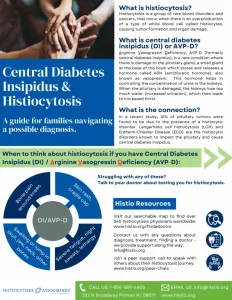
It should not be confused with the more common diabetes mellitus, also known as sugar diabetes, which results from too much sugar in the blood. Although both disorders have similar symptoms, in every other way including the cause and treatment, they are completely unrelated diseases.
The rate of occurrence for DI or AVP-D is not known, because there has been no organized method to count the number of patients. Some patients will present the symptoms of DI or AVP-D beforereceiving a diagnosis of histiocytosis, so communication with your physician about the possible connection between Diabetes Insipidus and histiocytosis, or other conditions, should be discussed.
Diabetes insipidus is a result of damage to the pituitary gland, a small gland at the base of the brain which stores and releases a hormone called ADH (antidiuretic hormone), also known as vasopressin. This hormone normally causes the kidney to control the amount of water released as urine from the body. When the pituitary is damaged, the kidneys lose too much water (increased urination), which then leads to increased thirst.
The connection between histiocytosis and diabetes insipidus was first reported in the late 1800s. Since then, DI has been recognized as a characteristic feature of Langerhans cell histiocytosis (LCH) and Erdheim-Chester disease (ECD). It is known to also occur in other histiocytic disorders, such as Rosai Dorfman disease (RDD) and Xanthogranuloma (XG/JXG).
It is believed that approximately between 5% and 50% of patients develop DI depending on the extent of disease. The risk of developing DI in patients with multisystem LCH is 4 to 6 times more than those with single-system disease. Patients with skull, facial, and/or eye bone lesions are at much higher risk of developing DI. This risk is increased further if the histiocytic disorder remains active for a longer period or if it recurs.
Diabetes insipidus is characterized by a great increase in the amount of urine passed (often several gallons per day) and an increased thirst. Any histiocytosis patient with an increase in drinking habits or passing large amounts of urine should be tested for DI.
Diabetes insipidus (DI, or AVP-D) is diagnosed with a water deprivation test, which measures changes in body weight, blood values, urine output, and urine composition when fluids are withheld over a several-hour period. It is very important that this test be supervised by a knowledgeable physician in a medical setting. An MRI scan is sometimes performed to see if there is change in the brain and pituitary area, but this test alone cannot diagnose DI.
Diabetes insipidus is usually a permanent, lifelong condition and cannot be cured. However, the symptoms of constant thirst and urination can be well controlled with treatment with DDAVP, a synthetic kind of vasopressin, and which can restore quality of life can be restored.
Diagnosed with AVP-D (formerly DI) and concerned you may have histiocytosis?
The below information sheet can be a useful resource to look over with your provider.